REVIEW · BANFF
Emerald Lake,Natural Bridge, Wapta Falls & Takakkaw Falls in Yoho
Book on Viator →Operated by Rockies Journey · Bookable on Viator
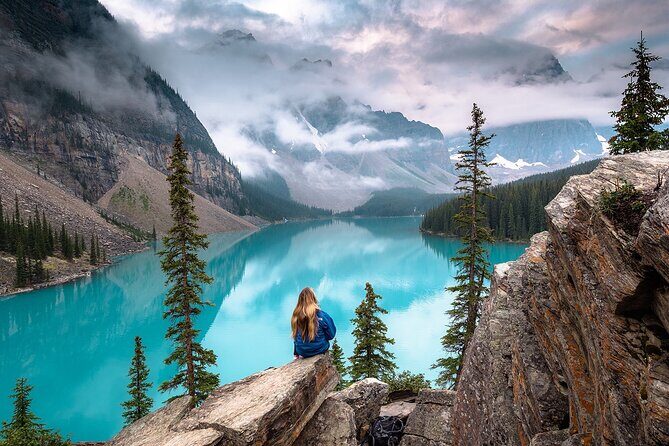
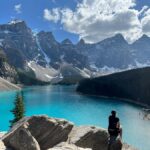
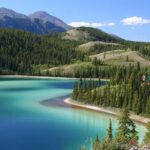
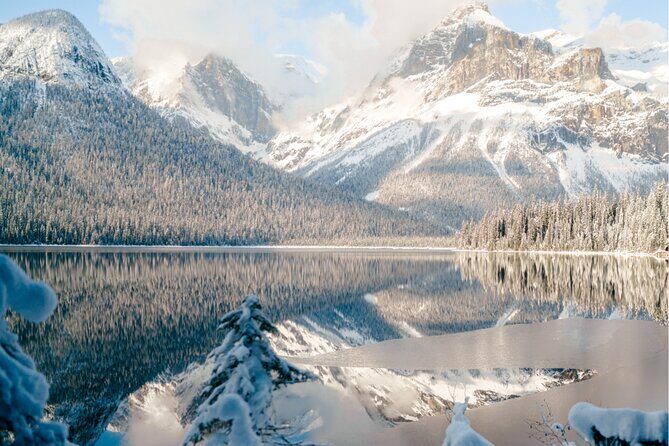
Ice, emerald water, and big waterfalls in one day. I love the way Emerald Lake turns glacial debris into that impossible green, and how winter versions freeze the whole setting into crisp, quiet ice. The detail is real, not staged: the color comes from rock flour in the water.
I also like the pace and the human touch. This is a small group day (max 14), and guides focus on photo vantage points, so you usually get the best view without a frantic scramble.
The only real drawback is the long day and the fact that summer includes a 4 km round-trip hike to Wapta Falls. If your legs get sore fast, that part will be the main test.
In This Review
- Key things I’d center in your planning
- A one-day route through Yoho’s best water sights
- Morning stops near Banff: Cascade, Vermilion, and Castle Mountain
- Emerald Lake: the green comes from glacial rock flour
- Natural Bridge: Ice-age drama at the Kicking Horse River
- Wapta Falls vs Lake Louise: how the season changes the hike
- In summer: Wapta Falls hike (4 km round trip)
- In winter: Lake Louise (or Lake Louise Ski Resort)
- If weather disrupts things
- Field lunch break: a real reset, not dead time
- Takakkaw Falls or Marble Canyon: your big finale
- Summer: Takakkaw Falls
- Winter: Marble Canyon
- Guides make this feel personal, not robotic
- What you’re paying for: $119.34 and why it can be good value
- Who should book, and who should rethink
- Should you book this Yoho day trip?
- FAQ
- How long is the Yoho waterfalls day trip?
- What’s included in the tour price?
- Are meals included?
- How much walking is involved at Wapta Falls?
- Does the itinerary change in winter?
- How many people are on the tour?
Key things I’d center in your planning
- Emerald Lake’s color has a science answer (tiny glacial debris, or rock flour)
- Natural Bridge can become an ice-walk scene in winter
- Wapta Falls switches to Lake Louise in winter, so your day still feels full
- Takakkaw Falls in summer vs Marble Canyon in winter keeps the finale dramatic
- Guides like Vicky, Patrick, Ray, Kenneth, and Wing get praised for timing and photos
A one-day route through Yoho’s best water sights
This is a long, well-packed day built around the water-heavy highlights of Yoho National Park. You start at 7:30 am, ride in an air-conditioned vehicle, and you’ll end back where you started. Expect about 8 to 10 hours total, counting driving time between stops, not just walking.
What makes this route feel smart is that you’re not bouncing between random checkpoints. You’re moving through a clear set of “wow” places: glacier-colored lake, a unique rock formation, then major waterfalls (or winter stand-ins). If you’ve only got one full day near Banff, this is the kind of itinerary that helps you squeeze maximum scenery into one schedule.
The group size matters too. With a maximum of 14 travelers, you don’t get lost in a huge crowd. That usually makes it easier to hear the guide, ask a quick question, and stay together on short walks.
Other Yoho National Park & Emerald Lake tours we've reviewed in Banff
Morning stops near Banff: Cascade, Vermilion, and Castle Mountain
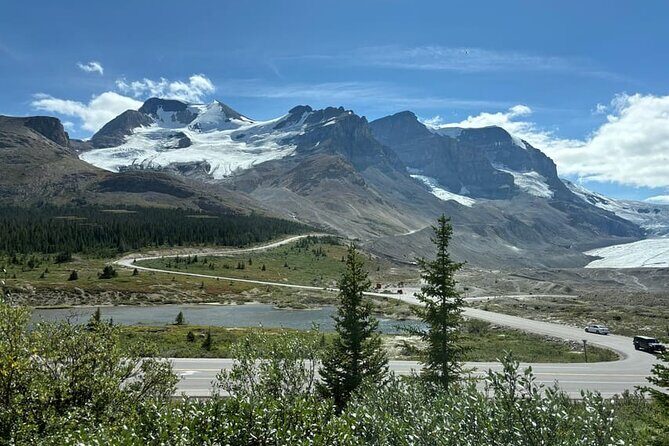
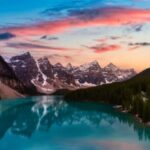
Before the Yoho core, the day includes classic Banff views that are fast, photogenic, and easy on your energy level. You’ll make stops at Cascade Mountain, Vermilion Lakes (three lakes with reflections of Mount Rundle), and Castle Mountain.
These aren’t marathon hikes. Think of them as orientation stops: you get your first “Canadian Rockies are real” moment before you commit your time to the longer water sights later.
If you’re the type who likes reflections and clean skyline views, Vermilion Lakes is a strong early pick. It helps set the tone for the day—glacier country, plus water that mirrors big peaks.
Emerald Lake: the green comes from glacial rock flour
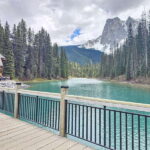
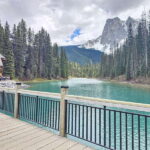
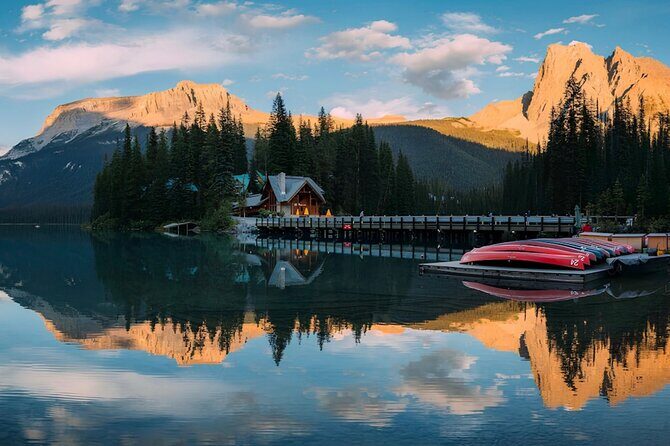
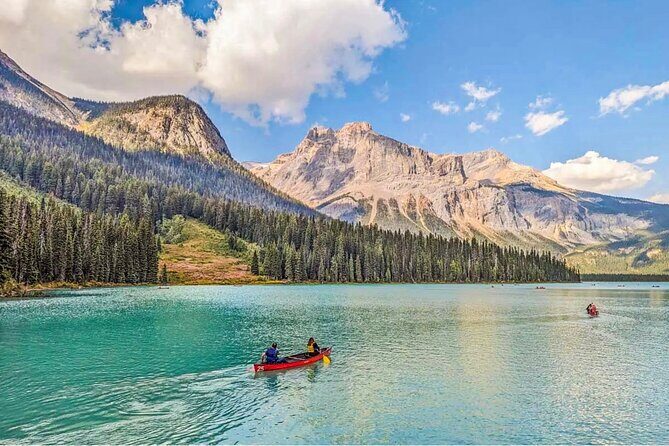
Your first big Yoho stop is Emerald Lake, with about 30 minutes on site and admission included. The main reason this lake gets talked about is its color. That vivid emerald isn’t from paint or luck. It comes from tiny glacial debris particles called rock flour suspended in the water.
Here’s why that matters for you: when you understand what’s creating the color, the whole place feels more satisfying. You’re not just chasing a photo. You’re seeing a natural process in action—water, ice, and sediment working together.
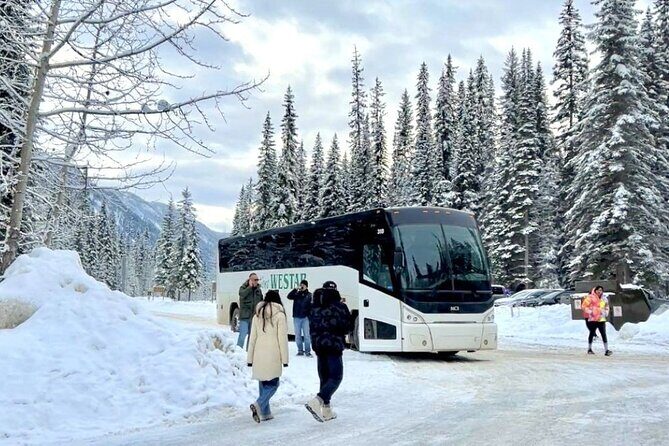
In winter, the look changes again. Instead of open, slushy shores, you’ll see a scene that’s largely frozen, with snow covering the ground. Even if conditions limit how much you can walk, the atmosphere tends to be quieter. It’s one of those stops where you can slow down and let your eyes adjust.
Practical tip: treat this as a “arrive, look, then photograph” stop. Emerald Lake is not a place where you need to rush to “win” the view. You’ll get more out of a couple of different angles—especially if the light shifts.
Natural Bridge: Ice-age drama at the Kicking Horse River
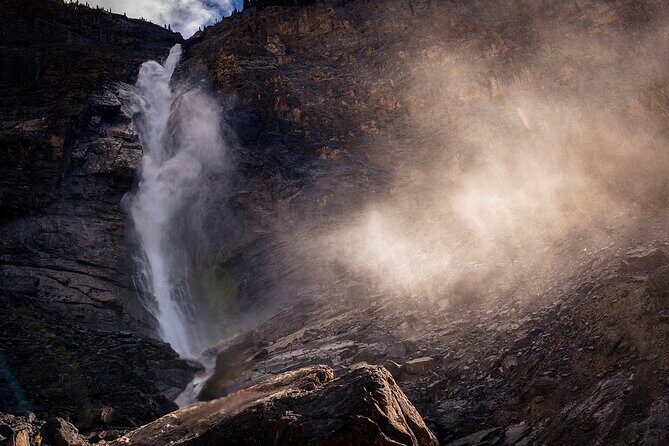
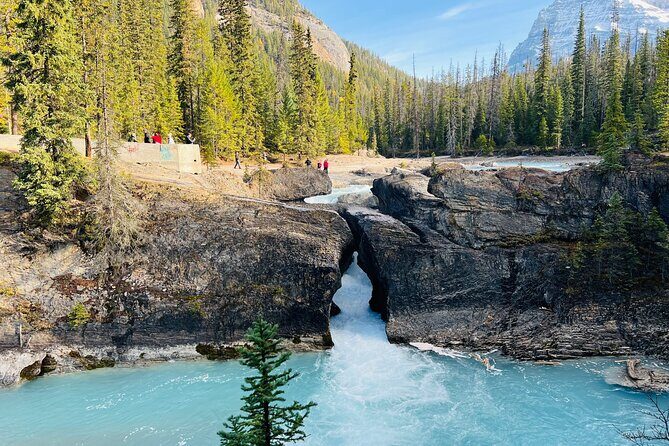
Next up is Natural Bridge, with about 15 minutes and admission included. In summer, it’s already a striking rock formation spanning the Kicking Horse River west of Field. But the winter version is where this stop earns its reputation.
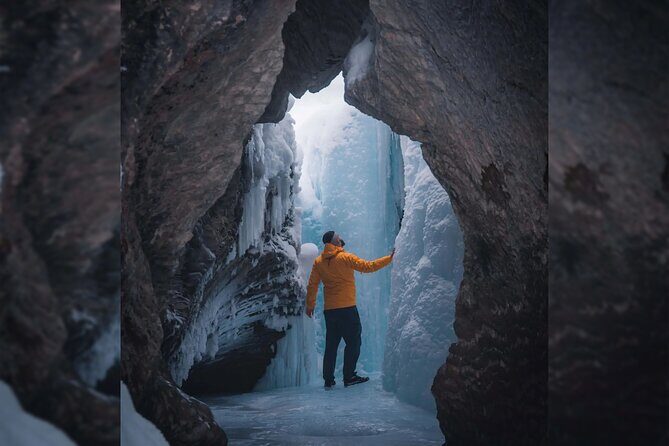
When temperatures drop, the river freezes and the falls can create ice spikes. The most fun part is that you can sometimes get onto the frozen river area (with the right gear), letting you see Natural Bridge from below. That angle turns a normal viewpoint into something more like a natural structure set from a movie.
This is also where the winter equipment starts to make sense. The tour includes crampons in winter, plus hot drinks, because you’ll likely be stepping over icy surfaces.
If you’re nervous about traction, don’t fake it. Use the crampons, and take your time on the ground-level parts. Even on short stops, a slip here would ruin the day.
Wapta Falls vs Lake Louise: how the season changes the hike
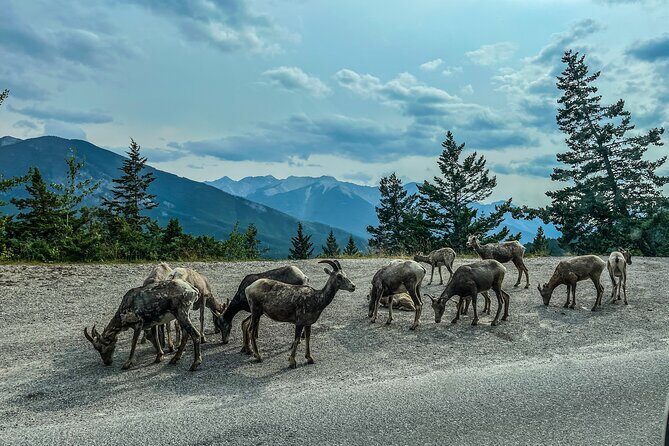
This stop is the heart of the “choose-your-legs” part of the day, but it changes by season.
In summer: Wapta Falls hike (4 km round trip)
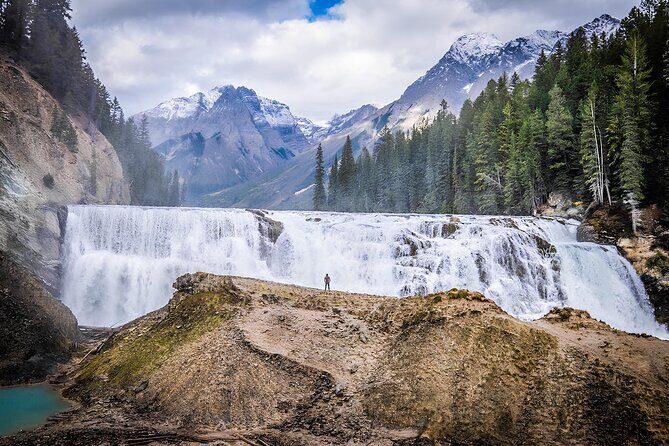
In summer, you’ll go to Wapta Falls. It’s the largest waterfall on the Kicking Horse River, about 18 meters high and 107 meters wide. That width is the trick. The water doesn’t just drop—it spreads, and it makes the air feel different when you’re near it.
You’ll do a 4 km round trip hike for this segment, and the time budget is about 2 hours including walking.
In winter: Lake Louise (or Lake Louise Ski Resort)
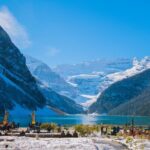
In winter, the Wapta segment becomes a visit to Lake Louise or Lake Louise Ski Resort, with about 1 hour there. You’re trading waterfall hiking for a frozen, ice-and-snow version of the most famous turquoise scenery in the area.
Why this swap is valuable for you: it keeps the day scenic even when waterfall-area trails might be unsafe or unpleasant to tackle. You still get a top-name sight, but without forcing the exact same hike.
If weather disrupts things
One of the smartest perks of this tour style is flexibility. On a rainy day, for example, your guide may adjust the plan to keep you safe and still get you great views—like swapping out a hike near the falls for additional lake stops such as Bow Lake and Peyto Lake. That kind of change is only possible when your guide is paying attention to conditions, not just a checklist.
Practical packing note: for summer, prepare for incline-and-decline walking. For winter, traction and layering matter more than shoe fashion.
Field lunch break: a real reset, not dead time
You’ll have about 1 hour in Field for lunch. Meals aren’t included, so plan on eating on your own during that window.
I like this structure because it prevents the day from turning into “all-go-no-stop.” You’ll have driven most of the morning, walked in the mid-day segments, and then you get a chance to reset—use the bathroom, grab food, and check how your feet are holding up.
If you’re worried about running out of energy during the afternoon waterfall finale, bring a small snack in addition to whatever you buy in town. It’s the kind of simple move that keeps your mood steady later.
Takakkaw Falls or Marble Canyon: your big finale
The last major nature hit is where the tour truly ends on a high note, but again it changes by season.
Summer: Takakkaw Falls
In summer, the tour includes Takakkaw Falls. You can reach the falls with a short 10 to 15-minute walk from the car park. The stop length is about 30 minutes, and admission is included.
Takakkaw Falls are massive: 373 meters tall, and it’s known as one of Canada’s tallest single-drop waterfalls. The name Takakkaw comes from Cree and means wonderful, which fits the feeling once you’re there.
One practical heads-up from late summer: the path can have mosquitoes. If you’re going in August, pack bug spray and don’t assume the breeze is always enough.
Winter: Marble Canyon
In winter, the Takakkaw segment becomes Marble Canyon. Expect about 1 hour, admission included. Marble Canyon looks especially good in winter because of the snow formations in the rock cuts, while the river below can remain deep blue and unfrozen.
There are bridges connecting areas, with short loop walks you can do once you’re there. The important part: the tour provides crampons for winter, and the “icewalk” concept is part of the experience. Don’t rush. Keep your steps steady and let the views land.
If you’re someone who likes variety—some people come to see waterfalls, others want canyon geometry and ice textures—Marble Canyon delivers a different kind of drama. It feels more architectural than Takakkaw’s sheer vertical wall of water.
Guides make this feel personal, not robotic
A big reason people rate this tour so highly is that the guide isn’t just driving. Multiple guides on the route—Vicky, Patrick, Ray, Kenneth, and Wing—are praised for staying present with the group and handling details that matter in the real world.
Here are the practical guide skills you should look for (and that you can benefit from during your day):
- Photo help at every stop: guides often take group and couple photos and steer you to better angles, sometimes just a few steps off the crowd’s default line.
- Care on walking segments: some guides bring walking poles for hikers, and they make sure everyone’s timing and footing are under control.
- Safety and adaptability: when conditions change—like rain or slippery surfaces—guides can suggest alternatives that still keep the day productive.
- No panic pacing: guides aim for timing that keeps you from feeling rushed, including joining a hike longer than expected when someone needs extra support.
When a guide is attentive like that, the difference shows up in small moments: someone checking who needs a hand, someone offering a water bottle or a hot drink in cold conditions, someone making sure you get a clean view before the light fades.
What you’re paying for: $119.34 and why it can be good value
At $119.34 per person, this isn’t a “cheap and cheerful” day. But it also isn’t just a ride with a few scenic pull-offs. The value is in what’s built in.
The tour includes:
- Air-conditioned vehicle
- Bottle of water
- Hot drinks in winter
- Crampons in winter
- GST
- Admission tickets at the main stops (Emerald Lake, Natural Bridge, Wapta or Lake Louise, Takakkaw or Marble Canyon)
Meals are not included, and you’ll also want to budget for a CAD 15 per person guide gratuity (service fee/gratuities).
For me, the best value angle is admission + gear. In places like these, you often end up paying extra for entry and then paying again for gear rental when it’s icy. Having crampons and at least some winter comfort included lowers the “surprise costs” feeling.
And because this is a one-day run through multiple headline sights, it can cost less than doing the same places with separate transport arrangements—especially if you’re not traveling with a car.
Who should book, and who should rethink
Book this if you:
- Want a one-day Yoho highlight package with major lakes and falls
- Like photography and don’t mind short walks between stops
- Can handle a 4 km round-trip hike in summer (Wapta Falls)
- Are comfortable with winter conditions if you’re traveling in colder months, since traction gear is part of the plan
Consider a different option if you:
- Want a day with no hiking at all (even the “short” segments add up)
- Have limited mobility or strong fear of slippery ground (icewalks and canyon walks can be demanding)
- Get frustrated by long drives and want a shorter half-day format
Should you book this Yoho day trip?
If you’ve only got one day near Banff and you want the real Yoho hits—Emerald Lake, Natural Bridge, and then either Wapta + Takakkaw in summer or Lake Louise + Marble Canyon in winter—this is a strong choice. The best part is the mix of big-name sights plus practical guide help: timing, photo angles, and adapting when conditions don’t cooperate.
If you’re hiking-capable and you go in with the mindset of a long, scenic outing (not a relaxed stroll), you’ll likely leave happy—tired, yes, but with that feeling that you actually used your time.
FAQ
How long is the Yoho waterfalls day trip?
It runs about 8 to 10 hours, and that includes travel time.
What’s included in the tour price?
The tour includes an air-conditioned vehicle, bottle of water, hot drinks in winter, crampons in winter, and GST, plus admission tickets for the listed stops.
Are meals included?
No. Meals aren’t included. You’ll have a 1-hour lunch break in Field where you’ll eat on your own.
How much walking is involved at Wapta Falls?
The Wapta Falls segment in summer includes a 4 km round-trip hike.
Does the itinerary change in winter?
Yes. In winter, Wapta Falls changes to Lake Louise or Lake Louise Ski Resort, and Takakkaw Falls changes to Marble Canyon.
How many people are on the tour?
The tour has a maximum group size of 14 travelers.