REVIEW · BANFF
The Banff Stargazing Tour – 2hr Walking Tour
Book on Viator →Operated by Banff & Canmore Tours · Bookable on Viator
You get Banff after dark, not after crowds. This 2-hour stargazing walking tour starts at Cave and Basin and guides you into the park as the sky turns serious—constellations, Milky Way chances, and stories from the mountain dark.
What I like most is the small group setup (max 20) with a professionally certified guide who helps you get ready with ice cleats and headlamps. You’ll also get that walk-and-look approach: around 3.5 miles (5 km), mostly flat, with stops for photos and sky talk—guides such as Kael and Ewan are commonly mentioned by name for turning the night sky into a real lesson, not a lecture. The main drawback is simple: cloud cover and moon brightness can affect how many stars you actually see, so the night can be stunning or merely great depending on conditions.
In This Review
- Key things to know before you go
- Why Banff at night feels different (and worth 2 hours)
- The meeting point: Cave and Basin, free parking, and getting geared up
- The walk itself: 3.5 miles, mostly flat, and realistic trail conditions
- What you’ll learn under the stars: constellations, history, and ecology
- Photography in real conditions: headlamps, Milky Way chances, and phone tips
- Timing and weather: when you go, and why cloud cover matters
- Who this tour is for (and who should skip it)
- Price and value: what $68.34 buys you in Banff
- Should you book Banff’s stargazing walk?
Key things to know before you go
- Meet at Cave and Basin: parking is free near 309 Cave Ave, and you should arrive about 10 minutes early for setup.
- Mostly-flat 3.5-mile walk: easy rating, but it’s still outdoors and can get muddy or uneven in spots.
- You’ll use ice cleats and headlamps: the guide helps you prep before you head out.
- Dark-sky timing after sunset: the departure time shifts with the season and usually starts just after sunset.
- Guides mix sky + Banff ecology: expect constellations plus local history and nature stories.
- Visibility depends on the night: partial cloud limits and bright moon can change the experience.
Why Banff at night feels different (and worth 2 hours)
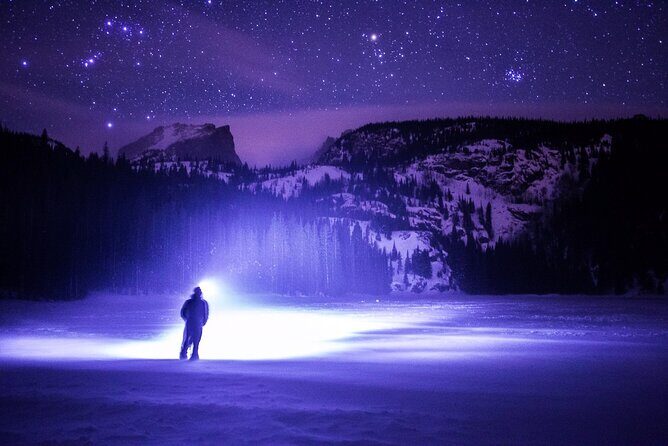
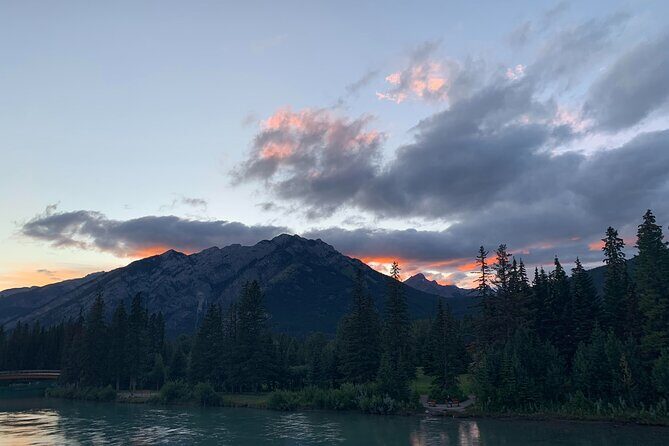
Banff is busy in daylight. At night, the park becomes slower and quieter, and you notice details you’d miss during the rush: the shape of mountain shadows, the sound of wildlife at a distance, and the feeling of being away from city glow. This tour is built around that shift—moving from a historic park meeting point into darker areas where you can actually track the stars.
The tour also has a practical advantage: it’s not just standing in one spot staring up. You’re walking a gentle route (about 3.5 miles / 5 km) with guided stops. That keeps things interesting and gives you chances to look from slightly different angles. Plus, because it’s a small-group format, you’re more likely to get real attention when you have questions—especially if you’re trying to figure out what you’re seeing in the sky.
One more reason I’d plan for this even if you’re not a hardcore astronomy person: the guide work matters. You’ll get help spotting constellations and understanding what you’re looking at, and many guides (such as Kael, Ewan, Jacob, Ben, and Isla) are described as funny and engaging in how they explain the night.
Other ghost, stargazing & night tours we've reviewed in Banff
The meeting point: Cave and Basin, free parking, and getting geared up
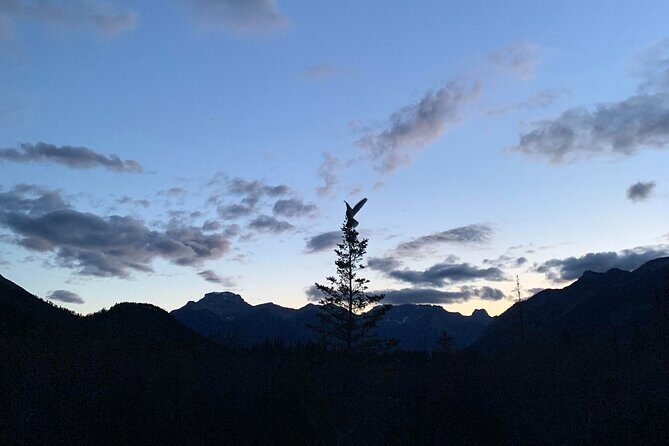
Your evening starts at the Cave and Basin National Historic Site in Banff National Park. The meeting point is at the parking lot / Welcome Building (address listed as 309 Cave Ave, Banff, AB T1L 1C3). The good news for road trippers: free parking is available right there.
Plan to arrive 10 minutes before departure. The guide will handle the setup—this is where you get ready with ice cleats and equipment, and you’ll also have headlamps for moving safely after dark. In cold months, the ice-cleat part is a big deal. Even if the walking is easy, you want traction so you can focus on the sky instead of your footing.
Also do a small practical thing that people forget: use the bathroom before you head out. One account notes that the only bathroom on site may close early, so you don’t want to be hunting for it in the dark.
Tip: bring warm layers you can adjust. Night skies are worth the effort, but you should still stay comfortable enough to stand at viewing stops and take photos.
The walk itself: 3.5 miles, mostly flat, and realistic trail conditions
The walking portion is rated Easy, totaling about 3.5 miles (5 km). The route is described as mostly flat, and you’ll likely see a mix of paved and boardwalk sections, plus some natural trail.
That said, outdoor walking is never totally “indoor easy.” One account points out that paved paths can still be a bit uneven, so if you trip easily, consider bringing hiking poles or canes. Another common theme is muddy conditions on some nights—usually just enough to make you regret non-outdoor footwear.
Trails are used by both horse and human, so you’re not walking in a totally empty environment. The upside is that this route is set up for easy movement, and the guide keeps the group together.
What you should wear:
- Outdoor footwear is required (not just sneakers for a sidewalk).
- Dress for cold and wet conditions. Even if it’s dry, winter air can bite.
What you’ll learn under the stars: constellations, history, and ecology
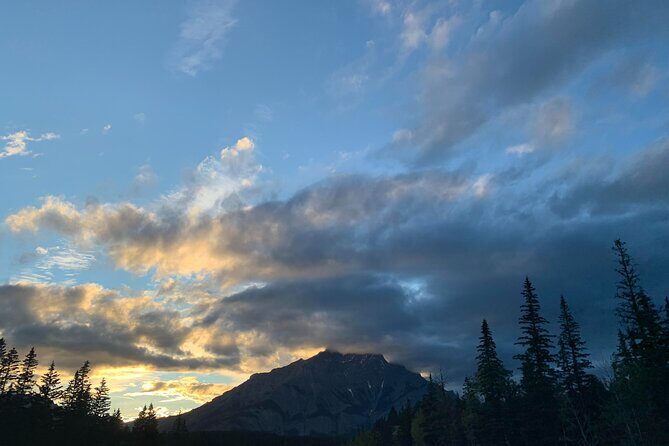
This is a stargazing tour, but it’s also a Banff tour at night. The guide helps you spot constellations and shares stories about Banff’s history and ecology as darkness settles. That combo is what turns this from a casual look-up session into a tour you’ll remember tomorrow.
You’ll get more out of it if you treat it like a guided lesson. Your guide will likely point out what’s visible right then, and you’ll start connecting the shapes to names. If you’re the type who wants to know what you’re looking at, this is where the tour shines.
And it’s not only stars. Some nights, wildlife cues show up—one person mentions hearing coyote howling during the walk. Even if you don’t get a wildlife moment, you still experience Banff in a way daytime visitors just don’t.
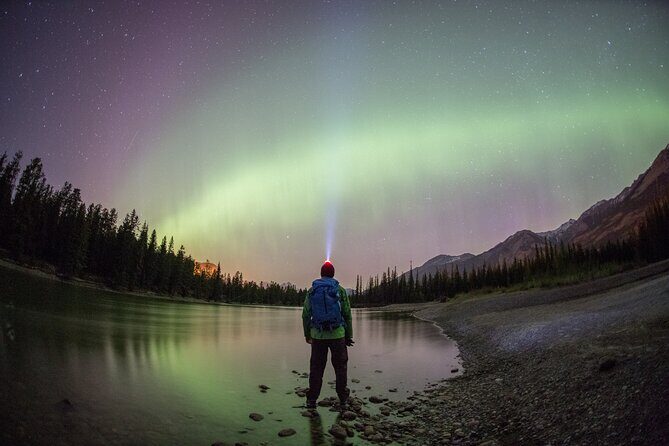
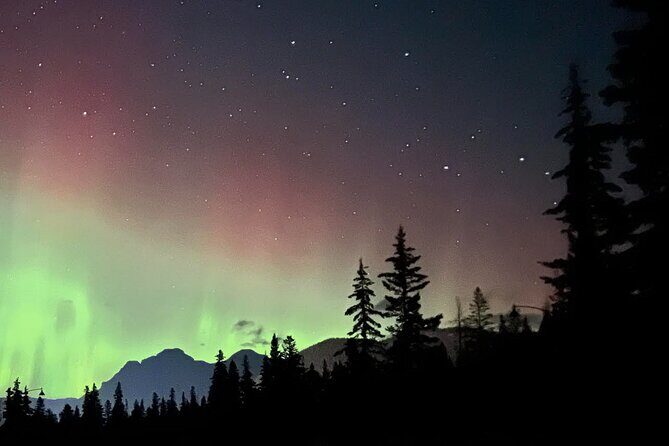
If you’re hoping for special sky events: Aurora sightings can happen in Banff, and at least one account mentions the northern lights on a clear night. Just remember that nature decides the schedule, not the itinerary.
Photography in real conditions: headlamps, Milky Way chances, and phone tips
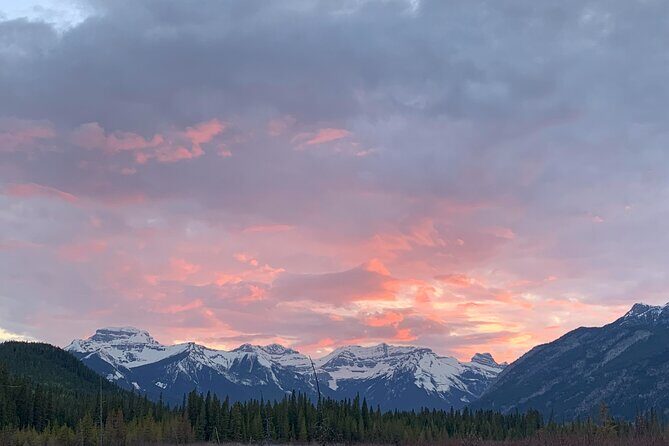
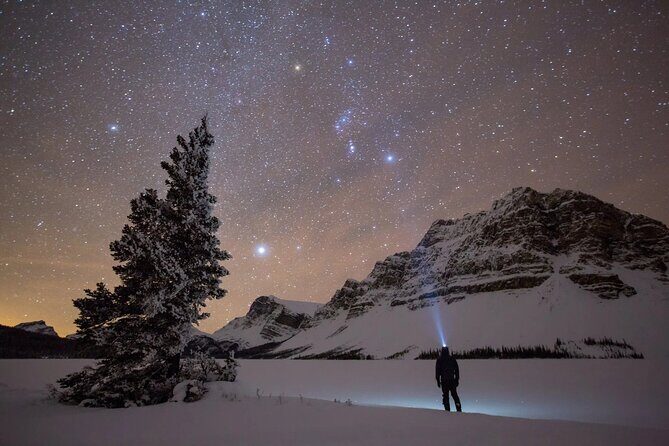
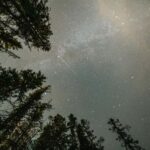
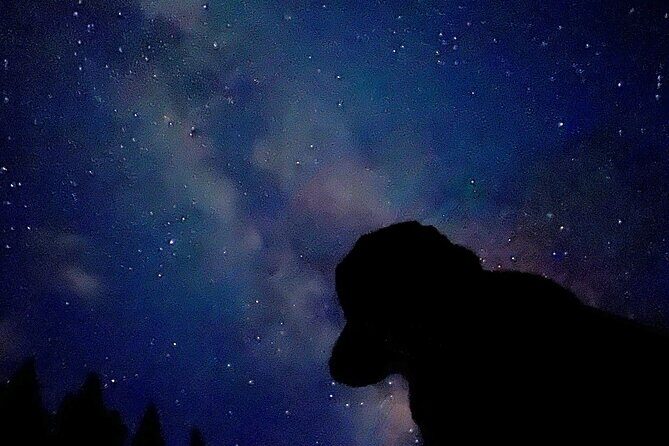
Banff National Park is known for protecting dark skies, and the tour leans into that. When the night is clear, you’re in prime territory for Milky Way viewing and night photography. The guide setup also helps: you’ll have headlamps for visibility while you walk, but the viewing stops are built around seeing the sky.
If you’re using a phone, bring it prepped. One account specifically notes the guide helped with photography settings on phones and encouraged using the phone’s night features. Before you leave, it helps to know where your night-sky mode lives, so you’re not fumbling in the cold.
Quick practical photo reminders:
- Give your eyes a minute to adjust after turning your headlamp down.
- Take test shots early, then refine.
- Don’t rely on flash—this is a dark-sky setting.
Also, if the moon is bright, the stars won’t look as crisp. One account explains that the guide warned the group about a bright moon and offered a refund option if people didn’t want to proceed. They still went, and the night remained rewarding—just not quite as star-dense as a darker moon phase.
Other Banff townsite walking tours we've reviewed in Banff
Timing and weather: when you go, and why cloud cover matters
Departure time changes seasonally because it depends on sunset. You’ll usually start just after sunset, and if the departure time changes, you’re contacted 8–24 hours prior by message.
Weather control is part of the tour design. The tour departs if skies are suitable: it lists a condition of partially cloudy at 50% cloud cover or less. If the night turns extreme—cold, rain, or snow—the operator offers refunds up to departure time for those weather situations.
So here’s the honest planning move: don’t schedule this like it’s guaranteed fireworks in the sky. Instead, treat it as your best shot at dark-sky viewing during your Banff stay. If the company offers alternatives due to weather, that flexibility is worth taking seriously.
Also, clouds aren’t just about comfort—they directly change the star picture. If you’re chasing the Milky Way look, a clear evening matters more than almost anything else.
Who this tour is for (and who should skip it)
This is a real walking tour, even though it’s rated easy. It’s not suitable for people with mobility issues, back problems, recent surgeries, or serious medical conditions. Pregnant women are also advised to refrain. It’s not designed for children under age 8.
Group size is also part of the experience. It’s limited to up to 20 travelers, which keeps things interactive and easier to manage on dark paths.
If you’re going with friends or a partner, this can be a strong date night option: it’s active, quiet, and different from the daytime routine. If you want a simple outdoor evening with guided learning and photo stops, you’ll likely feel at home here.
One more logistics note: transportation to and from the meeting location isn’t provided. If you’re not driving, plan your local taxi or rideshare ahead of time. Good thing: the meeting point is near public transportation.
Price and value: what $68.34 buys you in Banff
At $68.34 per person for about 2 hours, this isn’t a bargain gimmick. The value is in three places:
- Professional guidance plus safety gear: you’re getting a guide for the whole experience and support for ice-cleat readiness, plus headlamps for moving safely after dark.
- A small group format: max 20 keeps it personal. You’re not lost in a mass of people, and you’re more likely to get answers.
- Dark-sky access at the right time: you’re out after sunset, not just during a daytime overlook. That timing is a big part of why stargazing works here.
Add in the learning element—constellations, plus history and ecology—and it becomes more like a guided nature nightwalk with astronomy add-ons than a basic look-up session. If you’re paying to see the sky in a place that takes dark skies seriously, this price starts to make sense.
Should you book Banff’s stargazing walk?
If you want a night experience that’s active but not strenuous, this is a smart pick. The mostly-flat 3.5-mile walk, the small-group feel, and the mix of constellations plus Banff ecology are exactly the kind of guided experience that turns stargazing from random guessing into something you can actually follow.
I’d especially book it if:
- you’re okay dressing warm and walking outdoors after dark,
- you want photo help (even with just your phone),
- you’d rather spend time learning the sky than only chasing a quick view.
I’d think twice if:
- your main goal is guaranteed star density no matter what (clouds and bright moon can change results),
- you have mobility or medical limitations that make uneven, dark walking risky.
Bottom line: if you can handle winter clothing and you’re flexible with the sky, this tour is good value for an evening in Banff that most daytime itineraries never touch.