REVIEW · BANFF
Banff and its Wildlife – Year Round Tour
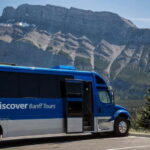
Book on Viator →Operated by Discover Banff Tours · Bookable on Viator
Banff’s wildlife chase starts with big views. This small-group morning tour gives you a tight circuit of Banff’s most famous natural landmarks, plus geology and local stories—while you keep an eye out for animals. It runs seasonally from April to mid-October, with hotel pickup built in.
I love the hotel pickup and drop-off convenience. It saves you the hassle of parking and timing, and it gets you on the road early. I also like the guide-led way the stops are explained, with hands-on interpretive tools and clear talk about how the area formed—something guides such as Bobby and Eli are especially known for.
The main drawback is simple: this isn’t a guaranteed wildlife sighting tour. You’ll search for elk, deer, bears, and bighorn sheep, but the wildlife show depends on season, weather, and luck.
In This Review
- Quick hits before you go
- A Banff morning circuit that’s more than just roadside stops
- Price and logistics: what $72.04 gets you (and what to watch for)
- Wildlife chances start on the road, not in a viewing tower
- Lake Minnewanka: Banff’s largest lake and a ghost town story
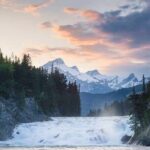
- Bow Falls: why this water hits harder than you expect
- Surprise Corner: Castle of the Rockies with Sulphur Mountain in frame
- Hoodoos Trail: time the stop for the best talk and best looks
- Bankhead Ghost Town: mining history shows up only in summer
- How the guide turns a short day into a useful one
- Timing reality: why you might spot wildlife or might not
- Who this tour fits best (and who should pick a different one)
- Should you book Banff and its Wildlife this season?
- FAQ
- How long is the Banff and its Wildlife tour?
- What time does the tour start in Banff?
- Is hotel pickup included?
- How many stops are included?
- Does the tour run year-round?
- Is admission included for the stops?
- What wildlife might you see?
- What’s included in the ticket price?
Quick hits before you go
- Early start for wildlife odds: the morning timing is built for spotting animals near Banff.
- Small group (max 24): easier listening and fewer people trying for the same photo spot.
- Five landmark stops: Lake Minnewanka, Bow Falls, Surprise Corner, the Hoodoos Trail viewpoint, and Bankhead Ghost Town (summer).
- Geology + local storytelling: interpretive tools and guide context make the scenery easier to understand.
- Indigenous place names show up: you may hear naming connections at the Hoodoos area like Sleeping Buffalo Guardian Mountain.
- A lot happens in a short ride: you get multiple sights in about 3 hours, but expect some time on the bus.
A Banff morning circuit that’s more than just roadside stops
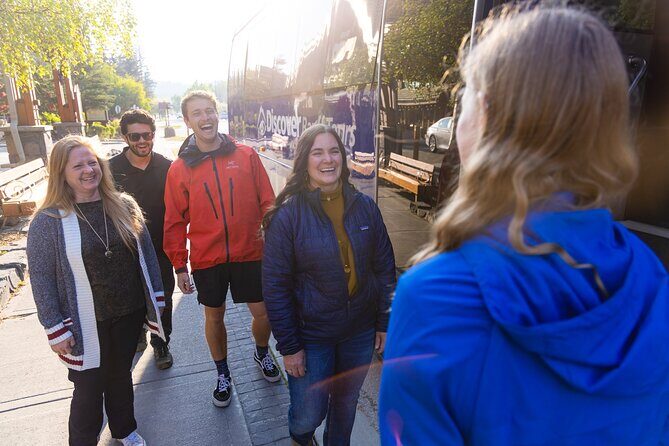
This tour is designed for people who want to get their bearings fast in Banff. In just about 3 hours, you’ll hit iconic sights that most first-timers put at the top of their lists, then add the background that usually only makes sense after you’ve already Googled it at night.
What makes it especially appealing is the combination: you’re not only looking out the window at mountains. You’re learning why the terrain looks like it does, and you’re searching for wildlife while you’re there. The result is a tour that feels like a guided field trip, not a stop-and-go checklist.
One thing to note up front: despite the tour name, it’s seasonal. It runs between April and mid-October, so if you’re traveling outside that window, you’ll need a different option.
Other Banff wildlife & safari tours we've reviewed in Banff
Price and logistics: what $72.04 gets you (and what to watch for)
At about $72.04 per person for a 3-hour experience, this is good value if you don’t want to drive your own rental to all the lookouts. The big practical win is pickup and drop-off, which keeps the day simple—especially if you’re staying in central Banff.
The group size is capped at 24 travelers, which matters. With a smaller group, you can actually hear the guide at stops, and you’re less likely to get stuck behind a wall of people when you want photos.
You’ll also use a mobile ticket, and you’ll meet the group at one of many pickup points around town. If you don’t choose pickup, you’ll default to the public bus parking behind the Mount Royal Hotel at 8:12 AM. The tour officially starts at 8:30 AM, but your assigned pickup time can vary, so be ready early rather than “on the dot.”
A final logistics reality: the day is short, and some parts move by bus. One common theme from past guests is that a large chunk of the time is driving, which you should treat as the trade-off for covering multiple big sights.
Wildlife chances start on the road, not in a viewing tower
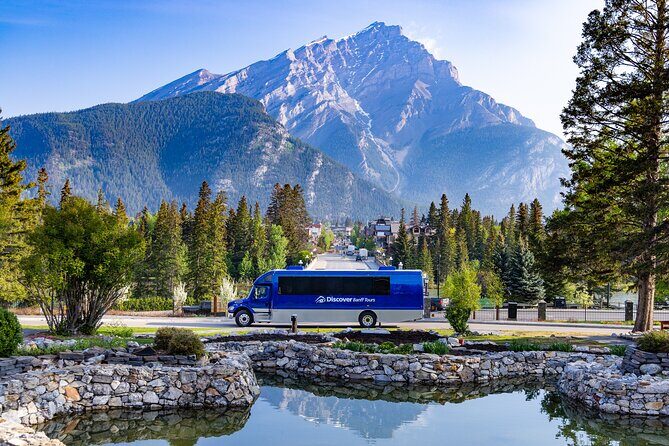
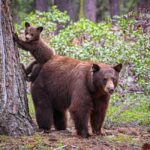
This is a wildlife-friendly outing, but it’s not a wildlife guarantee. Your job is to keep your eyes open as you pass through the Bow Valley area and stop at key overlooks.
The tour framing is very clear about what you may see—elk, deer, bears, and bighorn sheep—and it emphasizes the morning timing as your best shot. That fits what wildlife watchers know: early hours tend to be more active for animals, and the lighting is often better for spotting movement.
Here’s how I’d set expectations so you can enjoy the day either way:
- Treat wildlife as a bonus, not the main deliverable.
- Bring patience. Quiet spotting takes time, and road conditions can shift what the guide can do.
- Use the stops well. When the bus pauses, that’s your window to scan carefully.
If you’re the type who needs a high-likelihood wildlife encounter, look for a more wildlife-focused option instead. (Their evening wildlife safari is specifically mentioned as a dedicated choice.)
Lake Minnewanka: Banff’s largest lake and a ghost town story
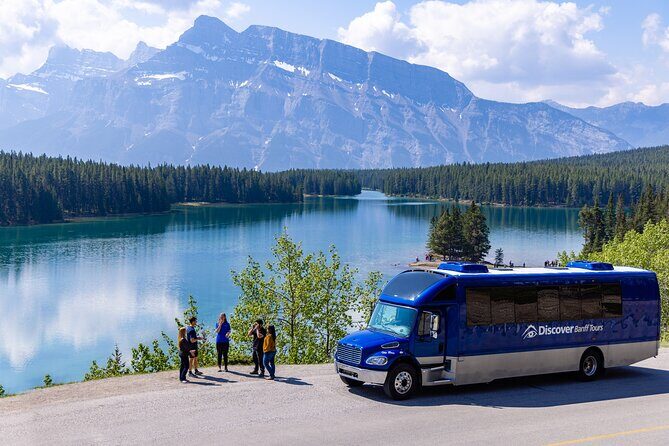
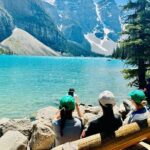
Your first stop is Lake Minnewanka, Banff’s largest lake. You’ll have about 15 minutes here, and there’s no admission fee at this stop.
This stop works because it pairs an easy view with a story that changes how you look at the water. The guide’s talk includes the history tied to the lake—famously described as an underwater ghost town—so you’re not just admiring scenery. You’re putting names and timelines behind what you’re seeing.
The practical tip: keep an eye on what the guide points out. With a short stop like this, the most interesting details are usually off-center—things you’d miss if you were only taking photos.
If you’re traveling with kids, this is also a great “first win” stop. It gives them something to look at right away, and the story element keeps attention from drifting.
Bow Falls: why this water hits harder than you expect
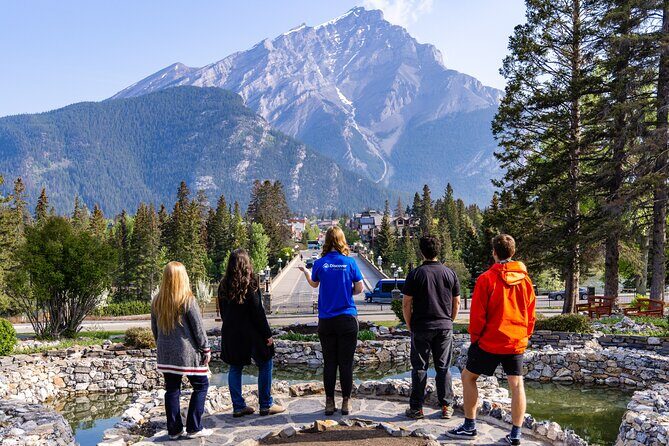
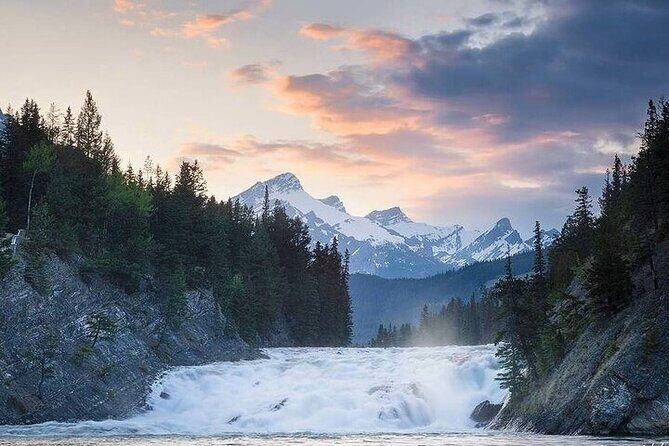
Next up is Bow Falls for about 10 minutes. Again, admission is free, and you’re in for one of Banff’s loudest, most immediate natural sights.
What makes Bow Falls memorable is the way the guide connects the sound and the geology. Water crashes over ancient limestone, creating a spectacle of sight and sound, and it’s also tied to classic Hollywood—featured in a 1950s film lineup that includes River of No Return with Marilyn Monroe.
Two small pieces of advice:
- Don’t count on perfect quiet. The falls are naturally noisy, and that’s part of the charm.
- If you want a better photo, wait a few seconds for the group to settle. It’s a popular stop, and you’ll get your best angles once people spread out.
This is also the kind of stop where wildlife can pop up nearby, but you shouldn’t assume it. Use the time to enjoy the falls first.
A few more Banff tours and experiences worth a look
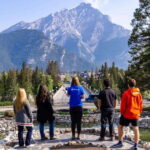
Surprise Corner: Castle of the Rockies with Sulphur Mountain in frame
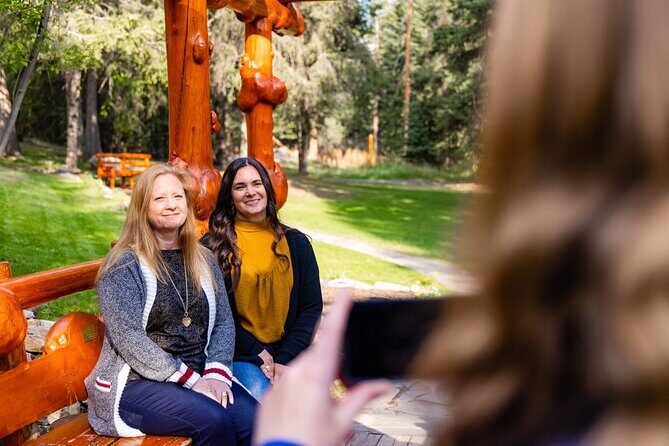
Then you head to Surprise Corner for about 10 minutes. This is one of those view stops that feels quick until you realize how much it helps your mental map of Banff.
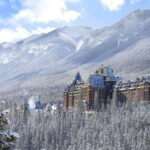
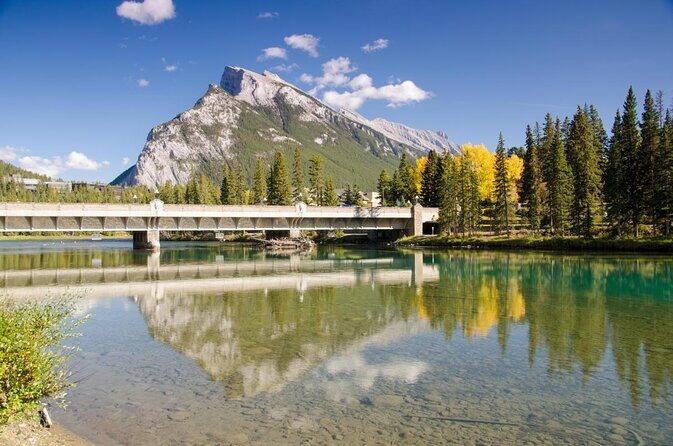
From here, you get an iconic view of the Castle of the Rockies with Sulphur Mountain behind it and the Bow River in the foreground. The guide typically explains what you’re looking at so the scenery starts making sense. That makes future drives and walks feel less random.
Because your time is short, stand where the guide indicates and be ready to move when they call the next group step. If you wander too far, you can end up missing the best viewpoint—especially on a morning when people are scanning for wildlife too.
Hoodoos Trail: time the stop for the best talk and best looks
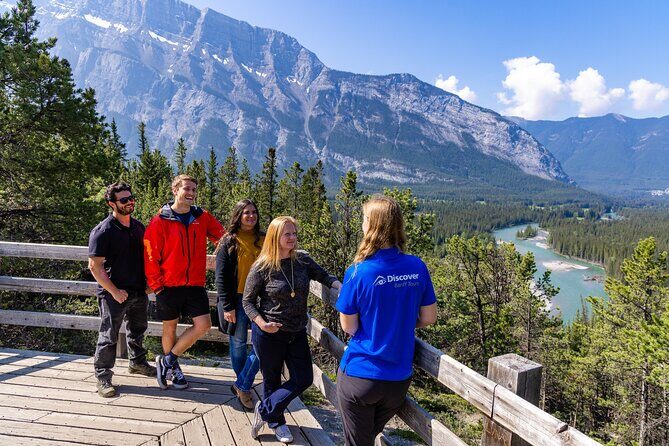
Your longest on-foot stop is at the Hoodoos Trail viewpoint, about 20 minutes. This is a strong mid-tour break because it mixes a dramatic rock formation with interpretation from the guide.
In addition to learning what hoodoos are, you may hear Indigenous naming connections tied to nearby rock formations. One example from guests’ experiences is the Indigenous reference Sleeping Buffalo Guardian Mountain, which adds meaning beyond the usual geology explanation.
A practical note: this is a viewpoint stop, not a long hike. Wear something comfortable and grippy, but you’re not expected to tackle trail miles. You should plan to take in the shapes from multiple angles if the group allows it—hoodoos look different depending on where the light hits.
This stop is also where you’re most likely to feel the “wildlife search” part of the tour. Even if you don’t spot animals, the wider scan for movement keeps you engaged.
Bankhead Ghost Town: mining history shows up only in summer
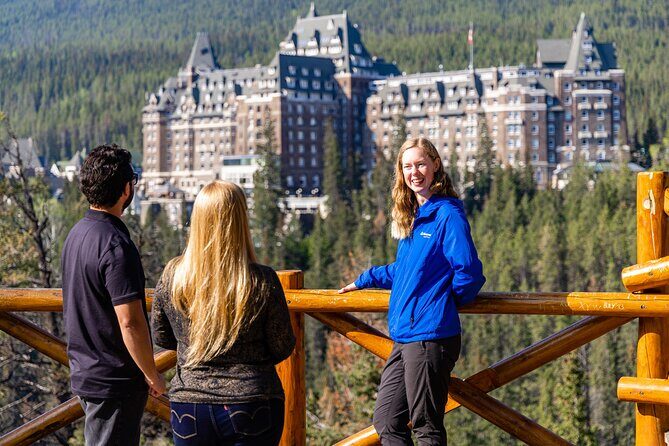
In summer, you may visit Bankhead Ghost Town for about 10 minutes. It’s marked as summer only, and admission is free.
This stop adds variety to the day because it’s not just nature. It’s a look at Banff’s industrial past—specifically an abandoned mining town—set in a scenic area that helps the history feel grounded rather than abstract.
If you’re visiting outside summer, you likely won’t get this stop. But the core experience still works without it: you still get the water, the falls, the mountain views, and the hoodoos.
When it’s offered, treat this as a quick “read the landscape” stop. You’re learning how human activity shaped the region, and it helps you understand why certain areas were important.
How the guide turns a short day into a useful one
A lot of the value here comes from the guide style. People repeatedly praise guides for being friendly, funny, and willing to answer questions at stops rather than rushing everyone through. Names you might see mentioned include Alex, Buck, Jake, Rod, Tim, Neil, and Andrew.
You’ll also get small comforts that keep the day from feeling like a punishment tour:
- fresh water
- a maple cookie snack
- and hands-on interpretive tools that help you connect stories to real features
In winter, hot chocolate is listed as part of the inclusions, but since this tour runs April to mid-October, you should assume you’ll mostly be dealing with morning coolness. Bring layers anyway. Banff mornings can feel colder than you expect, even when the afternoon turns pleasant.
The real trick is to ask questions during the stops. Because the schedule is tight, the best info often comes when you interact.
Timing reality: why you might spot wildlife or might not
Wildlife sighting outcomes vary. Sometimes you’ll catch animals close to the roadside. Sometimes you’ll see none at all. Even when you do spot something, it can be brief—so you need to be ready to look immediately when the guide alerts the group.
Here’s what helps your odds without making the day stressful:
- arrive early for pickup so you’re not rushing into the tour
- dress for chilly scanning (gloves help more than you think)
- keep distractions low—phones up for photos, but keep your eyes moving first
If you go in with a flexible mindset, you’ll still enjoy the trip. If you go expecting a guaranteed bear or a full elk parade, you may feel shortchanged.
A useful way to think about it: this is a Banff sightseeing day with a wildlife lens, not a wildlife-only mission.
Who this tour fits best (and who should pick a different one)
This is a good fit if you:
- want a first-morning introduction to Banff
- don’t have a car (or don’t want to drive between overlooks)
- like guided explanations that connect geology, history, and what you’re looking at
- want a short, structured outing rather than an open-ended day
It’s also a nice choice for families because the stops are short and the scenery variety is high.
If you want a purely wildlife-focused experience with more time dedicated to spotting, consider their dedicated evening wildlife safari instead. That’s the one designed with a stronger wildlife emphasis.
Should you book Banff and its Wildlife this season?
If you want a fast, friendly way to see Banff’s top natural sights with pickup handled for you, I think this is an easy yes. The mix of Lake Minnewanka, Bow Falls, Surprise Corner, and the Hoodoos viewpoint covers a lot of ground in a short window, and the guide-led storytelling makes it feel smarter than just sightseeing.
Just book with the right expectations. You’re buying convenience and context, plus a chance at wildlife—not a guarantee. If that fits your style, this is a solid value at about $72.04 for roughly 3 hours, especially with a small group.
If you’re traveling outside April to mid-October, you’ll also need to double-check seasonal availability. The “year-round” name can be misleading, so confirm dates before you commit.
FAQ
How long is the Banff and its Wildlife tour?
It lasts about 3 hours (approx.).
What time does the tour start in Banff?
The tour starts at 8:30 AM, though your pickup time may vary by location.
Is hotel pickup included?
Hotel pickup and drop-off are included on request. If you don’t select a pickup point, the default meet location is the public bus parking behind the Mount Royal Hotel at 8:12 AM.
How many stops are included?
You’ll make stops including Lake Minnewanka, Bow Falls, Surprise Corner, the Hoodoos Trail viewpoint, and Bankhead Ghost Town in summer.
Does the tour run year-round?
No. It operates seasonally between April and mid-October.
Is admission included for the stops?
Admission is listed as free for the included stops on the route.
What wildlife might you see?
The tour describes a chance to see elk, deer, bears, and bighorn sheep, especially in the morning.
What’s included in the ticket price?
A professional guide, a maple cookie snack, fresh water (hot chocolate is listed for winter conditions), hands-on interpretive tools, and pickup/drop-off.