REVIEW · BANFF
Self-Guided Audio Tours for the Canadian Rockies
Book on Viator →Operated by GuideAlong (GyPSy Guide) · Bookable on Viator
Banff to Jasper without a tour bus. It’s a self-guided, location-based drive with auto-playing stories and directions, built for the way you actually travel: stop when you want, skip when you don’t. I like that the route is stuffed with classic Rockies landmarks and quieter viewpoints, all connected by one app.
Two things I really love: first, you get GyPSy Guide audio that triggers as you reach each waypoint, so you’re not constantly reading or hunting for “what’s next.” Second, it works offline after download, which matters in this part of Canada where coverage can get spotty.
One drawback to consider: this is a driving and stopping tour. If you want mostly guided hiking with a staff member at your side, you may feel more independent than “led.”
In This Review
- Key things I’d plan around
- How this audio tour feels on the road
- Price and value: $39.99 per group (up to 8)
- What you actually get in the GuideAlong app
- Timing it right: what 12 hours to 1 day really means
- Banff first: Sulphur Mountain, Bow River viewpoints, and Cave & Basin
- Banff Gondola and Sulphur Mountain views
- Bow Falls and the Banff Springs Hotel angle
- Surprise Corner
- Cave and Basin National Historic Site
- Banff Upper Hot Springs
- Lake Minnewanka, Hoodoos Trail, and Vermilion Lakes
- The Banff to Lake Louise drive: 1A plus Johnston Canyon and Moraine Lake
- Johnston Canyon
- Moraine Lake
- Icefields Parkway: glaciers, waterfalls, and a drive that deserves narration
- Yoho National Park: Takakkaw Falls, Emerald Lake, Natural Bridge
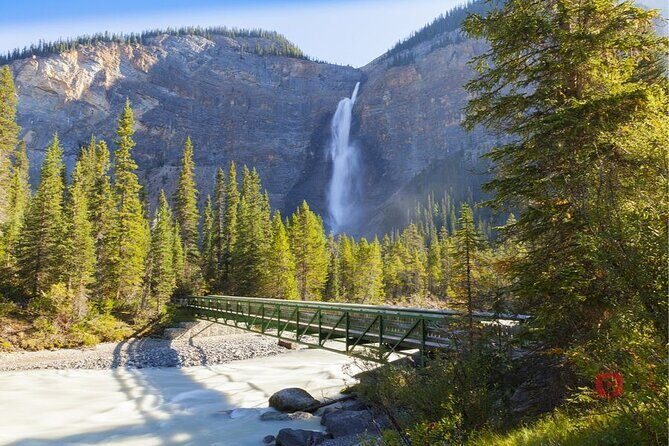
- Takakkaw Falls
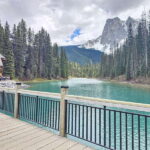
- Emerald Lake
- Kicking Horse area engineering: Spiral Tunnels viewpoint
- Jasper section: glaciers, canyons, hot springs, and big names
- Parker Ridge Trail and the Saskatchewan Glacier view
- Crowfoot Glacier and Bow Lake
- Jasper SkyTram
- Athabasca Glacier and Columbia Icefield Discovery Centre
- Sunwapta Falls and Canyon, Peyto Lake
- Pyramid and Patricia Lakes
- Maligne Canyon and Maligne Lake
- Athabasca Falls, Old Fort Point, and Mt Edith Cavell
- Miette Hot Springs
- Practical tips to make this kind of tour work
- Should you book this self-guided Canadian Rockies audio tour?
- FAQ
- Is the tour guided by an app, or is there a person with the group?
- How many people can use one booking?
- What language is the audio available in?
- Do I need internet or cell service during the tour?
- Does the tour include entry to major attractions like Banff Gondola or hot springs?
- How long is the experience?
- Where does the tour start and end?
- Can I start the tour later or on a different day?
- What support is available if something goes wrong with the app?
- Can I cancel for a refund?
Key things I’d plan around
- GPS-triggered narration means you hear the right story at the right turn and viewpoint.
- One purchase covers up to 8 in your vehicle, so it can be good value for families or friend groups.
- Offline mode helps when reception disappears in remote mountain stretches.
- Flexible start and finish anywhere along the route keeps your day realistic.
- Tickets aren’t included for a few major stops, so you’ll want a small budget buffer.
How this audio tour feels on the road
This is a private, self-guided experience powered by your phone’s GPS. Once you download, the app plays audio automatically based on your location while you drive, then you can take a quick pause, park, and switch to short walk listening with earbuds. The tone is practical: you’re not just learning what you’re seeing, you get tips on what to look for and what matters in each place.
The biggest mindset shift is that this tour is designed around your timing. You’re not stuck at fixed departure times, and you’re not penalized for slow photo stops. If you want to linger near a waterfall or cut a hike short, the app stays useful either way because you can keep moving through the route at your pace.
Other guided tours in Banff
Price and value: $39.99 per group (up to 8)
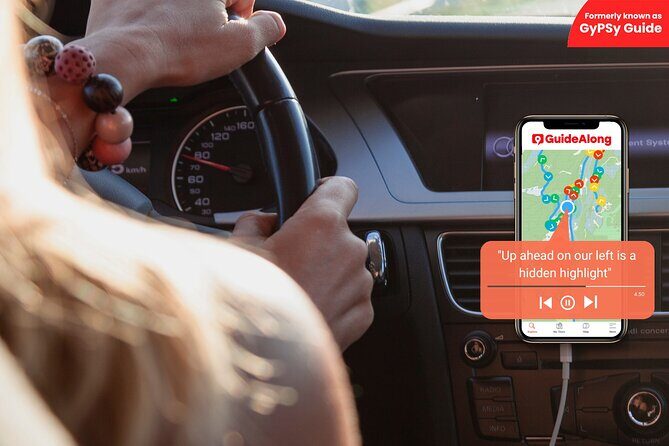
At $39.99 per group up to 8, the value is strongest when you have more than two people traveling together. It’s not priced per person, and it’s not priced like you need separate logins for everyone in the car.
That said, it is still a phone-based experience. You’ll want one device playing the narration via your car Bluetooth or speaker, and you’ll want the battery to hold up. Bring a USB/C car charger so you’re not racing for outlets mid-drive.
Also, the tour price covers the audio and trip planning tools, not the park passes or the ticketed attractions. A few stops require admission (and those add up fast), so treat this as a high-value way to find and enjoy the sights, then pay attraction tickets only where it makes sense for your day.
What you actually get in the GuideAlong app
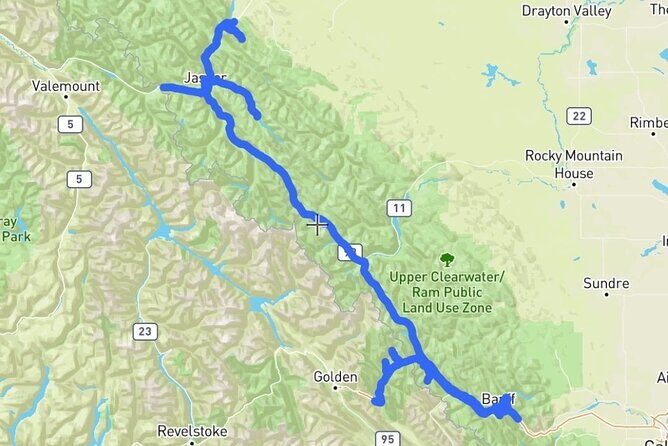
Included with your purchase is the GuideAlong (GyPSy Guide) audio tour with 520 points. Those points are the backbone of the experience: they’re the places the app comments on and the places you use to anchor your day.
Other useful features you should care about:
- Location-based autoplay: the narration starts when you’re near each stop.
- Suggested routes and trip planners inside the app (plus web and PDF planners).
- Pre-download for offline listening, so you’re not stuck searching for signal.
- Support by toll-free phone, chat, and email, in case your download process gets stuck.
The in-car convenience is real. One review described it like a friendly buddy in the back seat, with directions arriving right when they’re needed. That’s the practical win here: the audio is timed to the road, not to a page you have to keep checking.
Timing it right: what 12 hours to 1 day really means
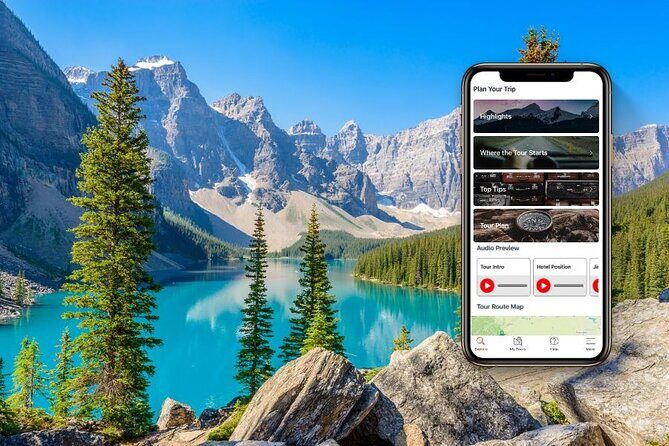
The overall experience is listed as roughly 12 hours to about 1 day. In other words, it’s doable as a long day drive if you move between stops. But you’ll get more out of it if you treat it like a series of mini-experiences.
To make it work, I suggest you do this:
- Choose fewer hikes and more short photo stops on a tight day.
- If you want a longer hike, plan it as your main exercise and keep the other stops quick.
- If weather is rough or you hit wildfire-driven road changes, the offline download helps you keep the route moving by using the app’s map/list points even when you’re not perfectly on signal.
Banff first: Sulphur Mountain, Bow River viewpoints, and Cave & Basin
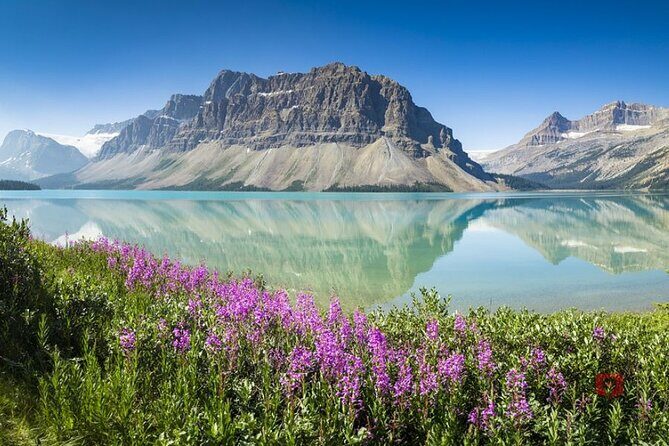
Your Banff side of the route focuses on “why people come here” stuff: mountain views, classic river scenery, and the place Banff’s national park story begins.
A few more Banff tours and experiences worth a look


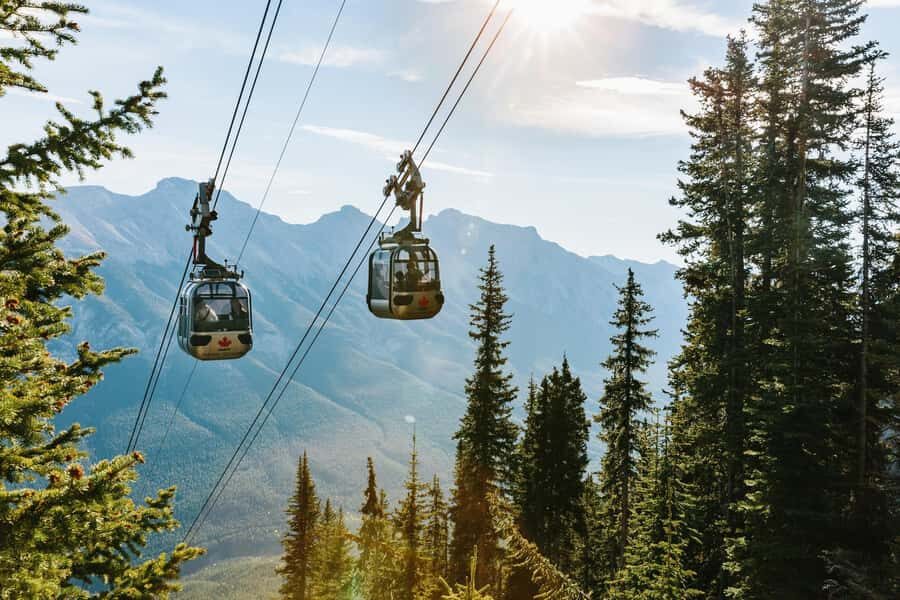
Banff Gondola and Sulphur Mountain views
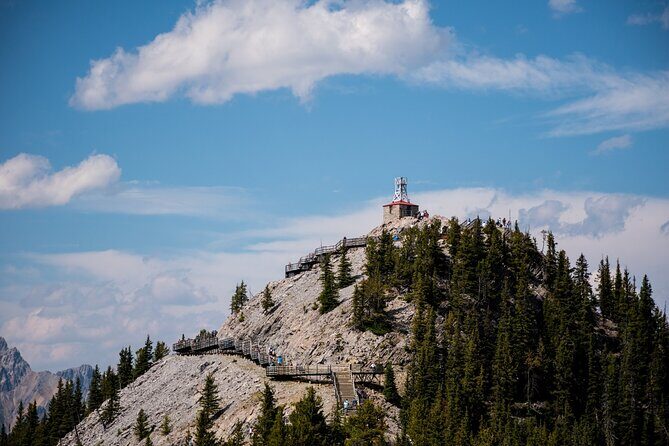
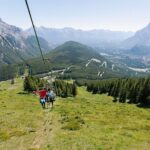
Sulphur Mountain is the classic payoff: 360-degree views spanning multiple mountain ranges. The audio points help you follow boardwalks toward the Cosmic Ray Station area, and you might even catch bighorn sheep near boardwalks.
Ticket note: Banff Gondola admission is not included, so you’re deciding at the start of the day whether you want that paid viewpoint.
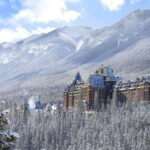
Bow Falls and the Banff Springs Hotel angle
Next, the Bow River shows off in quick wins. Bow Falls is near the Banff Springs Hotel area, and the app cues you to a viewing trail that leads to a higher viewpoint. One reason this stop stays interesting is how water level changes across the year, especially during spring thaw.
Surprise Corner
This is a short, free stop built for photo framing. You look across to the Banff Springs Hotel, Bow Falls below, and Sulphur and Rundle Mountains as a backdrop. The road here is a blind corner, so slow down and double-check for traffic before you park and step out.
Cave and Basin National Historic Site
Cave and Basin is a “how Banff became Banff” stop. The thermal mineral springs drew attention after railway workers discovered a cave in 1883, and that interest fed directly into establishing Canada’s first national park.
Expect an interpretive centre plus boardwalks to see the original underground cave and the endangered tiny Banff Springs snail. Ticket note: Cave and Basin admission is not included, so you’ll likely want to budget for it if you care about the human story behind the park.
Banff Upper Hot Springs
Then you get the health-retreat tradition in a place where you can actually bathe in the park area. Hot springs water is typically 37–40C (98–104F), and it’s described as the only hot springs where bathing is possible in Banff National Park. It’s also located just above the Banff Gondola base station.
Ticket note: Banff Upper Hot Springs admission is not included, and the tour lists $17.50 per booking.
Lake Minnewanka, Hoodoos Trail, and Vermilion Lakes
These three stops shift you from paid attractions into short, free nature time.
- Lake Minnewanka: a glacial lake expanded by dams, with cruises along the shore and a Stewart Canyon hike option that’s described as easy and rewarding.
- Hoodoos Trail: a flat, easy walk to viewpoints showing fairy-chimney formations formed by erosion.
- Vermilion Lakes: a short walk or bike ride near town that’s strong for wildlife viewing, especially birds and coyotes, with bears and moose possible.
This cluster is where the audio tour pays off for “day planning.” It’s easy to spend a full day only on the big-ticket names. These help you balance it with repeatable, low-stress outdoor moments.
The Banff to Lake Louise drive: 1A plus Johnston Canyon and Moraine Lake
Once you’re heading out of Banff, the route leans into a slower, more scenic alternative than the fast highway. The drive along the old Trans Canada Highway 1A is framed by peaks and includes scenic viewpoints, plus two iconic photo spots: Castle Mountain and Morant’s Curve, tied to the historic train marketing photo.
Johnston Canyon
Johnston Canyon is one of the most popular natural attractions for a reason. The walk to the Lower Falls is described as about 1.1 km (1 mile) along a trail with steel catwalks bolted into the canyon walls. You can crouch through a short tunnel to reach a final platform.
Continue to Upper Falls if your legs are happy. In summer, the canyon mist can feel like natural air-conditioning. In winter, expect freeze-up and icy waterfall scenes.
Moraine Lake
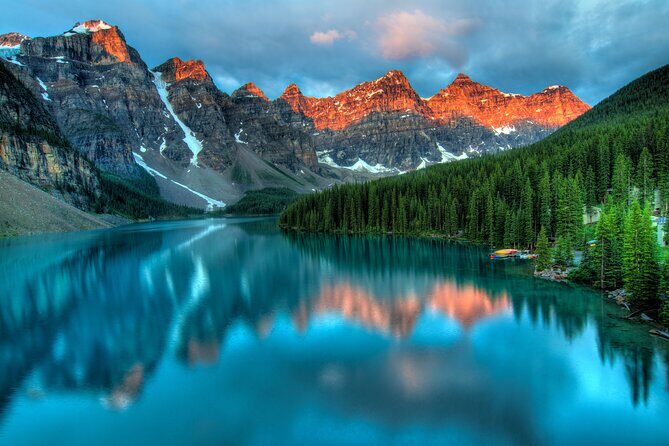
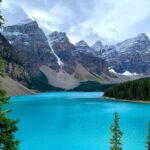
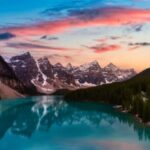
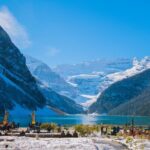
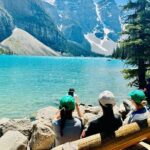
Moraine Lake is the “postcard Canada” stop, with the Valley of the Ten Peaks view and the turquoise look people associate with Canadian Rockies. Your options include:
- canoeing
- a short walk to Rockpile Viewpoint or Consolation Lake
- a meal at Moraine Lake Lodge
It typically thaws June–October.
Practical tip: if you’re thinking canoe time or boat tours, the route data suggests you should plan timing accordingly. Moraine Lake is typically a June-through-summer experience.
Icefields Parkway: glaciers, waterfalls, and a drive that deserves narration
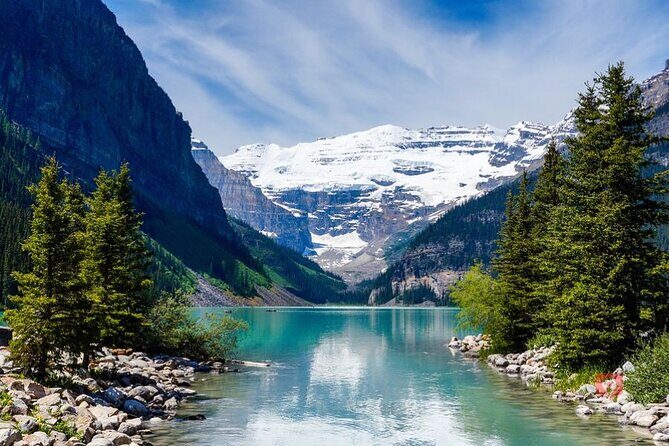
The Icefields Parkway is described as one of the most scenic mountain drives in the world, and the tour is set up to help you focus your attention. The audio cues must-do stops and also notes places to explore if you have extra time.
As you drive, you’ll get guided attention on:
- brightly coloured lakes and glaciers
- waterfalls along the route
- wildlife spotting opportunities
The audio helps on this road because you’re moving fast between pull-offs. Without narration, it can feel like you’re seeing “big stuff” but not knowing why each viewpoint is special.
Yoho National Park: Takakkaw Falls, Emerald Lake, Natural Bridge
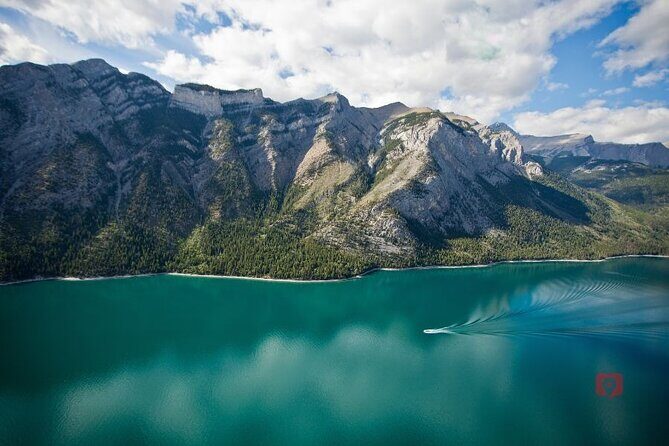
After Lake Louise area stops, the route continues west into Yoho National Park for waterfall and lake payoffs.
Takakkaw Falls
Takakkaw Falls is described as a major glacier-fed waterfall, and the route through Yoho Valley can be a good wildlife spotting opportunity. One big timing detail: the road usually does not open until June due to avalanche hazards. If you’re traveling outside that window, double-check what’s reachable.
Emerald Lake
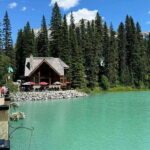
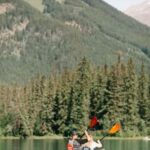
Emerald Lake is singled out for its colour and alpine setting. You can do:
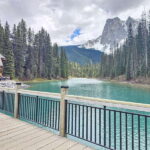
- a flat loop walk around the perimeter
- canoeing
And there’s a lodge on the shore for lunch, depending on your style.
There’s also a quick bonus stop at Natural Bridge on the access road to Emerald Lake.
Kicking Horse area engineering: Spiral Tunnels viewpoint
The route includes the Spiral Tunnels viewpoint, tied to the challenge of connecting the Atlantic and Pacific through the Rockies. From the viewpoint, you can see trains appear to move through spiral tunnels, managing steep grades at Kicking Horse Pass.
This is a great stop if you like when the mountains and human problem-solving meet.
Jasper section: glaciers, canyons, hot springs, and big names
As you move into the Jasper side of the route, the tone keeps shifting: from quick iconic viewpoints to places where you can build an actual half-day experience.
Parker Ridge Trail and the Saskatchewan Glacier view
Parker Ridge is a short but steep hike near the Icefield Centre. The key reward is the view back toward the Saskatchewan Glacier. The route data flags that elevation can hit harder than you expect at about 6,000 feet, and snow can be present year-round.
Crowfoot Glacier and Bow Lake
These are quick wins with strong visual identity.
- Crowfoot Glacier looks like hanging glacier formations shaped like a crow’s foot, and the route data notes it shrunk from three toes to two.
- Bow Lake is fed by the Bow Glacier, and a historic lodge called Num Ti Jah sits beside it.
Bow Lake is described as an excellent photo stop. It’s also a place where you can pause and listen while waiting for light to change.
Jasper SkyTram
Jasper SkyTram is near Whistlers Mountain (not the Whistler ski resort). The tram glides up to about 2,200 m (7,200 ft). After the top station, you can hike higher into the alpine or enjoy mountaintop dining.
Ticket note: Jasper SkyTram admission is not included.
Athabasca Glacier and Columbia Icefield Discovery Centre
This is the most classic glacier block on the route.
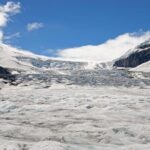
- The Athabasca Glacier is described as one of the most accessible glaciers in the world.
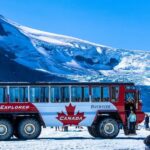
- The Columbia Icefield Discovery Centre is where you can book an Ice Explorer-style glacier vehicle tour and also the separate SkyWalk option.
The tour data suggests you should plan time carefully if you want both the glacier vehicle portion and the glass-bottomed SkyWalk, including at least 3 hours for the combined experience. If you’re short on time, the data says the SkyWalk can be booked separately.
Sunwapta Falls and Canyon, Peyto Lake
- Sunwapta offers quick access to viewpoints and a short loop trail for deeper canyon views.
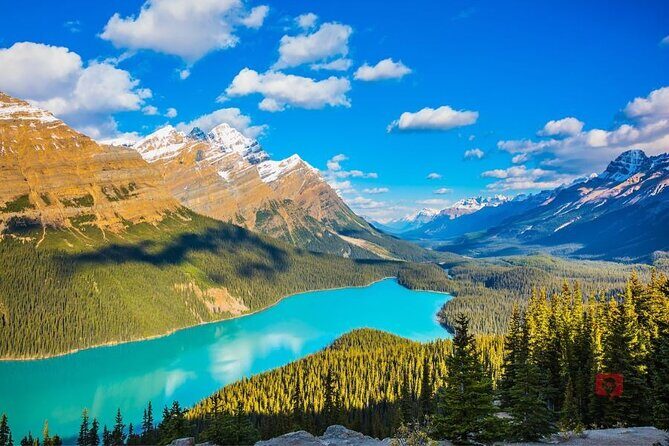
- Peyto Lake is at Bow Summit, described as glacier-fed with colour that can brighten with sunshine.
These two are excellent when you want a steady flow of nature stops without a long hike commitment.
Pyramid and Patricia Lakes
For Jasper photo lovers, Pyramid and Patricia Lakes are a rewarding stop for the viewpoint across Pyramid Lake to Pyramid Mountain, including a small footbridge to a photo island. The route narration also points out a WWII-related story connected to testing on Patricia Lake.
Maligne Canyon and Maligne Lake
- Maligne Canyon is a limestone cut canyon with quick access and multiple viewpoints. If you want to stretch your legs, there are longer trails starting from a bridge location.
- Maligne Lake is a longer drive to a lakeshore area where short hiking is limited but the lake cruise is the standout activity. If you want the famous Spirit Lake photo, the data says you must prebook cruise time.
Athabasca Falls, Old Fort Point, and Mt Edith Cavell
The ending stretch is “Jasper workout with payoff.”
- Athabasca Falls can be dramatic during spring thaw with snowmelt.
- Old Fort Point Loop Trail is a short climb near town with views back over valleys, and bighorn sheep are common nearby.
- Mt Edith Cavell is a side trip that can take at least 2 hours, with two hike options:
- Path of the Glacier to Cavell Pond (with a possibility of icebergs)
- Cavell Meadows Trail, described as longer and better mid-summer for wildflowers, plus views of Angel Glacier and small animal activity.
Miette Hot Springs
Finish with relaxation. Miette Hot Springs is on the eastern side of the park, described as having the hottest thermal pools in the Rockies. The drive from Jasper is short, and there are wildlife viewing opportunities along the way. This stop works as a good “end-of-day reset” after long sightseeing.
Practical tips to make this kind of tour work
This tour is built around convenience, but you still have to set yourself up for success.
Bring:
- a car charger
- earbuds/headphones for any walking segments
- a little flexibility in your schedule for drive time and stop time
Drive smart:
- Park and step out safely at every roadside viewpoint. Some stops have blind-corner warnings, like Surprise Corner.
- Don’t plan your day like a checklist. Plan it like a rhythm: short stop, next waypoint, short walk, repeat.
And tickets:
- You’ll pay for the major ticketed attractions you choose, like Banff Gondola, Cave and Basin, and Banff Upper Hot Springs. The guide will get you to the doors, but it won’t cover admissions.
Should you book this self-guided Canadian Rockies audio tour?
If you’re doing the Canadian Rockies by rental car and you want to cut stress while still learning what you’re seeing, I think this is a strong buy. It’s especially worth it when you have up to 8 people in one vehicle, because the group price makes the app feel like a bargain rather than a novelty.
Book it if you like:
- independent travel
- lots of short scenic stops
- GPS-triggered stories that arrive at the right moment
- the freedom to skip anything that feels like too much
Skip it if you want a staff-led tour with enforced pacing and group check-ins. This experience gives you the steering wheel, not a chaperone.
If your plan includes Banff to Jasper in one trip, this route is set up for exactly that kind of big, high-effort day without turning your drive into a guessing game.
FAQ
Is the tour guided by an app, or is there a person with the group?
It’s a self-guided audio tour. The GuideAlong (GyPSy Guide) app plays commentary automatically based on your GPS location as you drive.
How many people can use one booking?
The price is per group up to 8, and it’s a private tour/activity where only your group participates.
What language is the audio available in?
The audio tour is offered in English.
Do I need internet or cell service during the tour?
No. You can pre-download the tour over WiFi or cellular data and then it works offline, so you don’t need internet or cell service once downloaded.
Does the tour include entry to major attractions like Banff Gondola or hot springs?
No. National park passes and attraction tickets are not included. Ticket prices vary, and the tour lists specific charges for Banff Upper Hot Springs and Cave and Basin.
How long is the experience?
It’s listed as approximately 12 hours to 1 day.
Where does the tour start and end?
The start is in the Banff National Park Improvement District area, and the end is in Jasper National Park in Jasper. The audio plays based on your location, so you can start and end anywhere along the route.
Can I start the tour later or on a different day?
Yes. It’s a one-time purchase with no expiry and no date/time limit, so you can use it on another day if plans change.
What support is available if something goes wrong with the app?
Support is available daily by toll-free phone, chat, and email.
Can I cancel for a refund?
Yes, you can cancel for free up to 24 hours in advance for a full refund. If you cancel less than 24 hours before the start time, the amount paid won’t be refunded.